Crystals.com
Charoite
Authentic natural minerals, thoughtfully sourced and individually photographed.

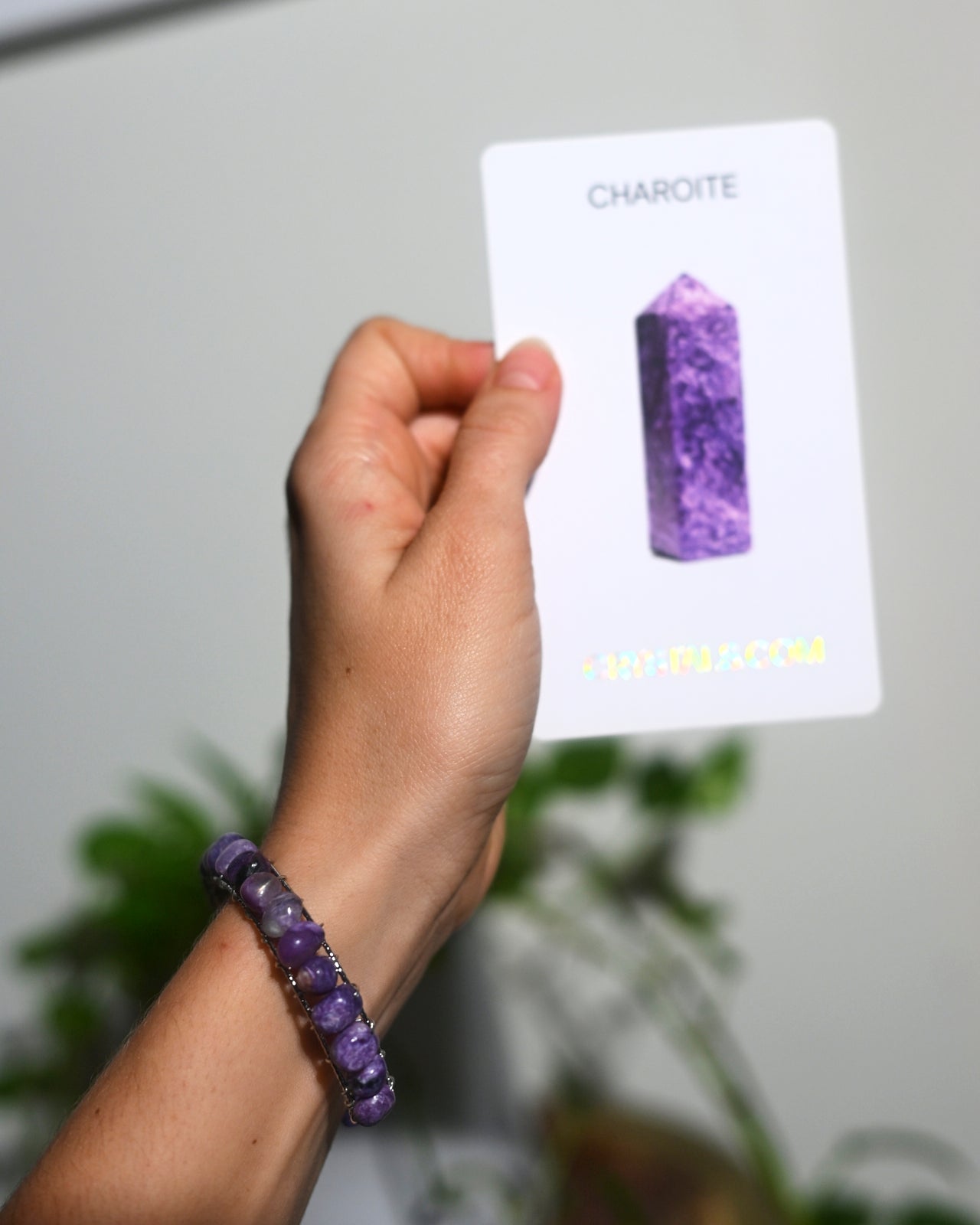
Charoite Crystal
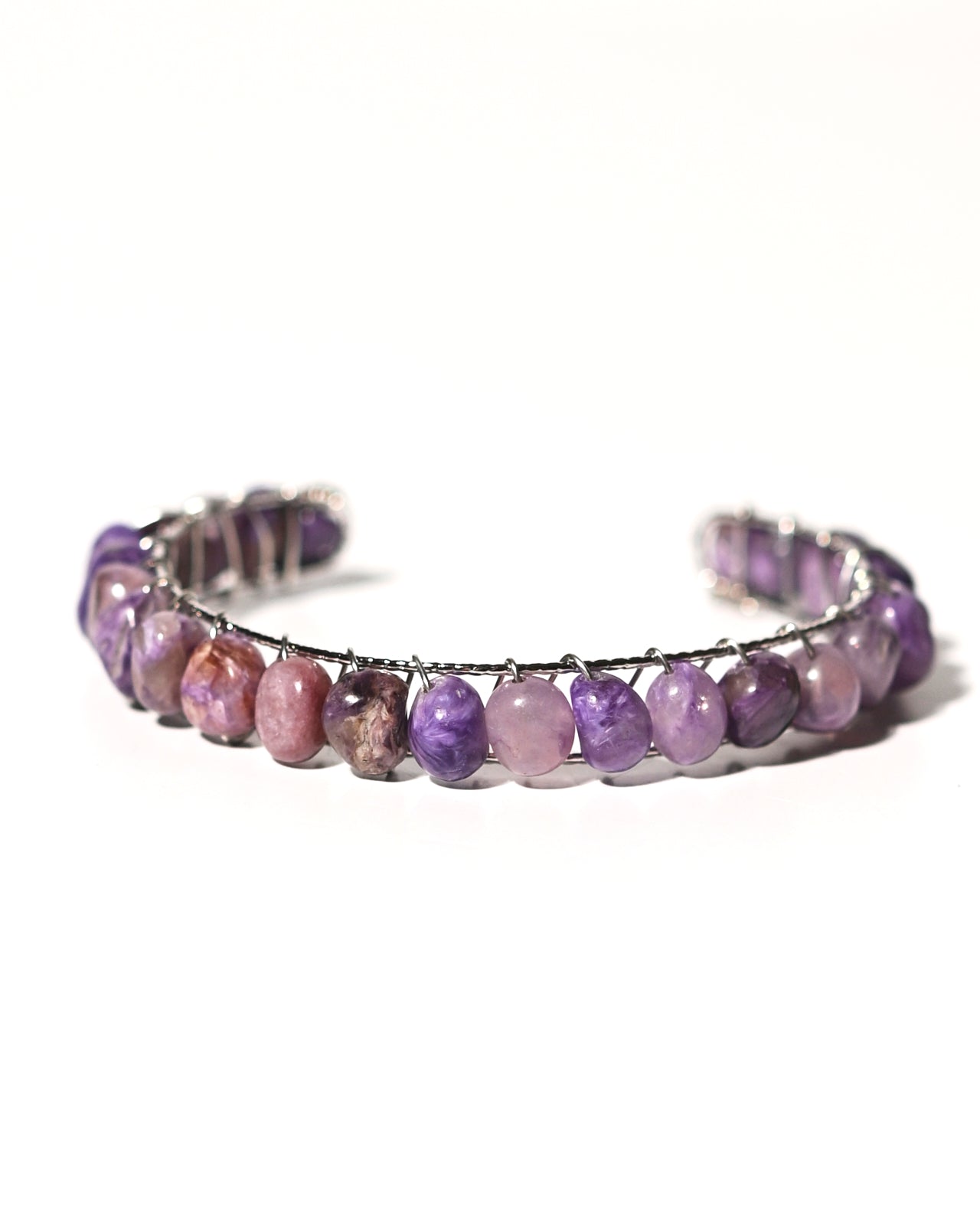
Charoite is a rare silicate mineral found in only one location on earth: the Murun massif along the Chara River in the Sakha Republic (Yakutia) of Siberia, Russia. It was first described scientifically in 1978, making it one of the more recently discovered gem-quality minerals. Its swirling purple and white patterns, combined with a chatoyant shimmer, produce a visual effect unlike any other mineral — flowing bands of lavender, violet, and white that look almost liquid.
Charoite has a Mohs hardness of 5-6 and takes an excellent polish that reveals its complex internal fibrous structure. The mineral's limited geographic range makes it genuinely rare — unlike stones marketed as "rare" that are actually abundant worldwide. Fine charoite is becoming increasingly difficult to source as the Russian deposits are worked.
This collection features polished freeforms, palm stones, tumbled stones, spheres, and cabochons. Charoite pairs beautifully with amethyst, lepidolite, and lapis lazuli in purple-toned displays. For other rare collector minerals, browse our Collector's Edition. Free shipping on all U.S. orders over $150.
Frequently Asked Questions
What is charoite?
Charoite is a rare silicate mineral (Mohs 5-6) found exclusively along the Chara River in Siberia, Russia. First described in 1978, it is characterized by swirling purple, violet, and white banding with a chatoyant shimmer caused by its fibrous crystal structure. It is one of the few gem-quality minerals found at only one locality worldwide.
Is charoite rare?
Yes — genuinely rare. Charoite occurs at a single location in Siberia and nowhere else on earth. This is not marketing language; it is a geological fact. The deposits are remote and increasingly difficult to work, making fine specimens harder to source each year. This single-locality exclusivity is unusual even among collector minerals.
How can I tell if charoite is real?
Genuine charoite has a distinctive swirling fibrous texture visible under magnification and a chatoyant shimmer when polished. The purple color is not uniform — it flows in bands of lavender, violet, and white. Fakes (usually dyed jasper or resin) lack the fibrous internal structure and tend to have more uniform coloring. At Crystals.com, all charoite is verified natural Siberian material.
How do I care for charoite?
Charoite is moderately hard (Mohs 5-6) and takes wear reasonably well. Store separately from harder minerals like quartz to prevent scratches. Clean with a soft damp cloth. Avoid harsh chemicals. Polished pieces are durable for display; raw specimens should be handled with more care as the fibrous structure can be delicate at edges.
What does charoite look like?
Charoite displays swirling, flowing patterns of purple, violet, lavender, and white — sometimes with black inclusions of aegirine or orange tinaksite. When polished, the fibrous structure produces a chatoyant shimmer (similar to tiger's eye but in purple). The pattern looks almost fluid, as if the colors were caught mid-swirl and frozen in place.

Let customers speak for us
I like it so cute🥰🥰🥰

Very very pleased with the quality of the minerals. Packaging and service are excellent. You can see the care that goes into every order.
Fantastic! I really love the pyrite I got. It's got great shine and faceting. The crystals are a great size relative to the overall piece.

Beautiful, Great color and clarity. I was really pleased with it.

My shopping experience could not have been better. All I need now is more money to buy the beautiful items on her site.
This cluster has absolutely amazing positive energy. It arrived that way. And it is gorgeous. I had been searching for “the right” citrine crystal for over a year. This cluster has exceeded all expectations. Brittany has been fabulous too. All my experiences with crystals.com have been positive.

Gorgeous! Beautiful stone and shipped rather quickly.

better than i expected

Perfect size!

This Garnet necklace is full of surprises! Rich in color and sparkle, Garnet also is rich in power to motivate. Its superpower is supporting your long haul goal. This stone will aid you to move past stagnation and find within the persistence, energy, and commitment to reach your goal.

Just as a necklace, this is a stunning piece. Malachite has an intense power against negativity. I feel it every time I wear it. It has the power to draw out blockages, that's its superpower, that's how it heals. This is a necklace of purpose, be ready for its power.

I'm new to collecting Stones and Crystals but have long known their powers. I found that when i'm ready for their gifts, the right stone makes itself known. I am ready for transformation, protection, assistance in meditation and focus on my path. Conscious Items has wonderful stones and crystals and provides excellent information on how to best use them. They also protect your items well when they ship them! Good People!
This necklace is Perfect in every way. The healing power of Malachite is softened with Rose Quartz and amplified by Clear Quartz. This is a necklace with undeniable purpose. I felt the powerful energy as soon as I put it on.

This was my first order with this company. My crystals arrived quickly. I was very impressed with the packaging. They are GORGEOUS!!
Perfect size at a great price!

A Sanctuary of Natural Beauty
Every crystal here was discovered by hand, selected with intuition, and photographed in its true light.
One-of-a-Kind. Forever Pieces.
Let the Universe Decide


